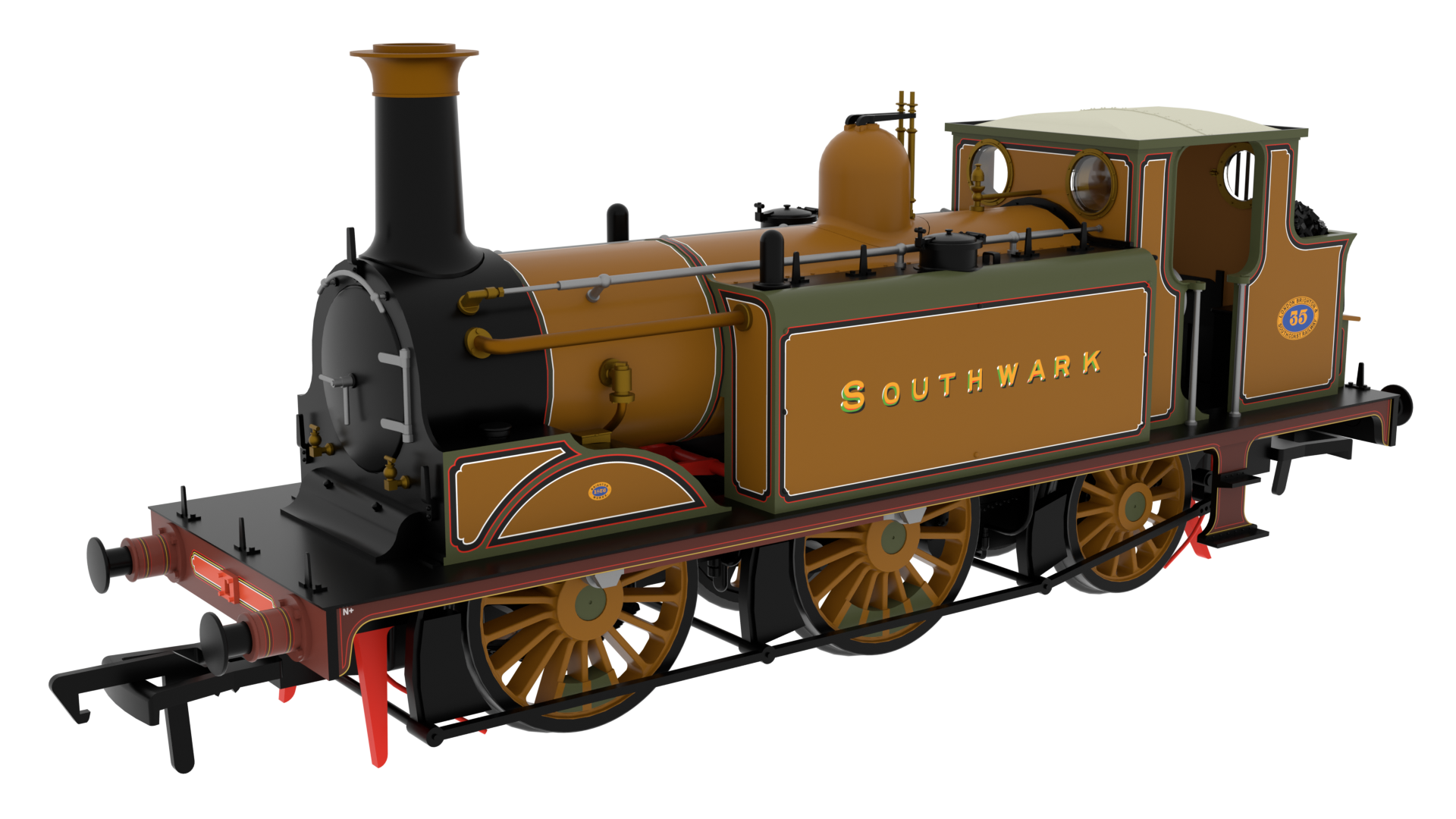
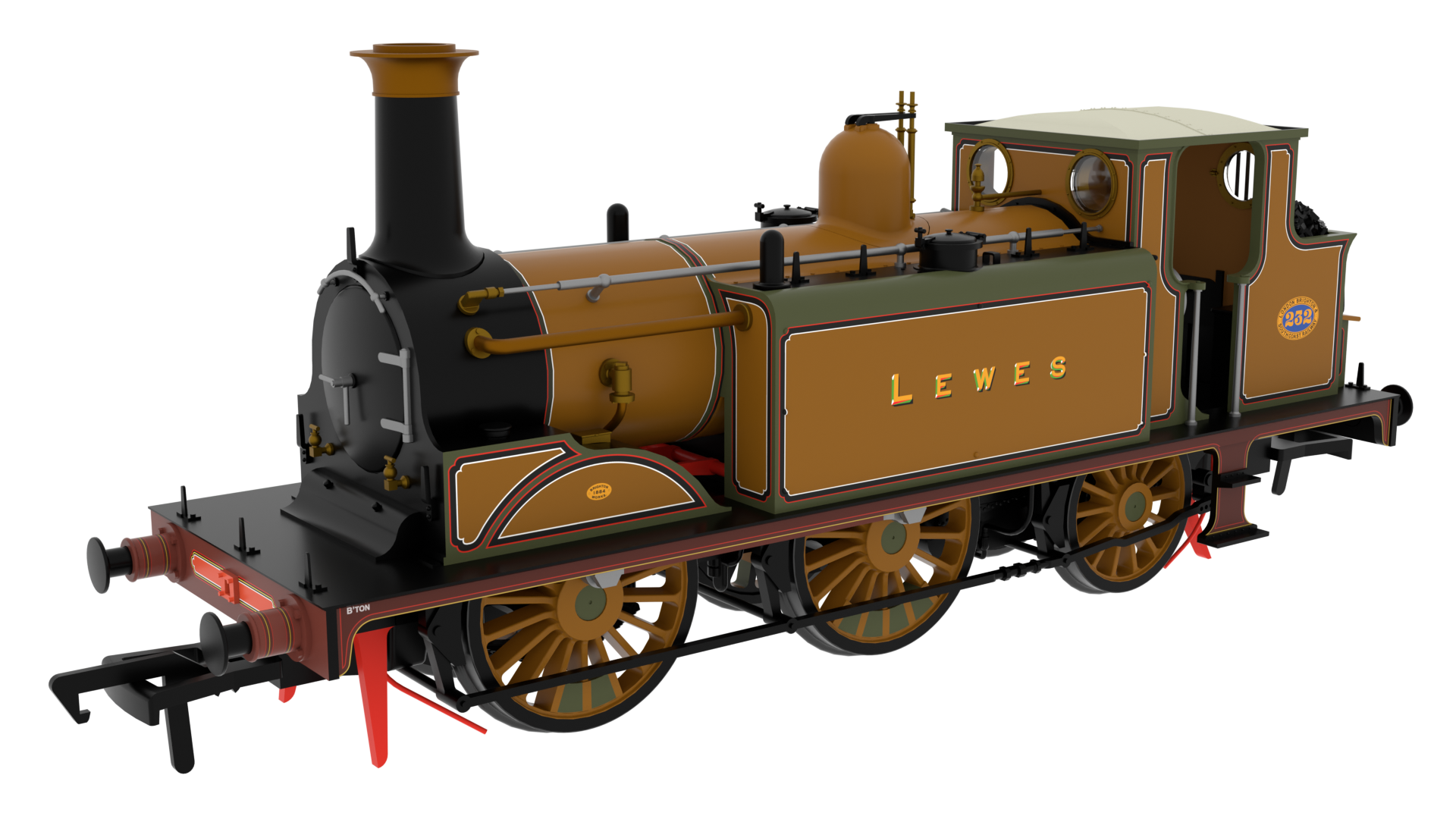
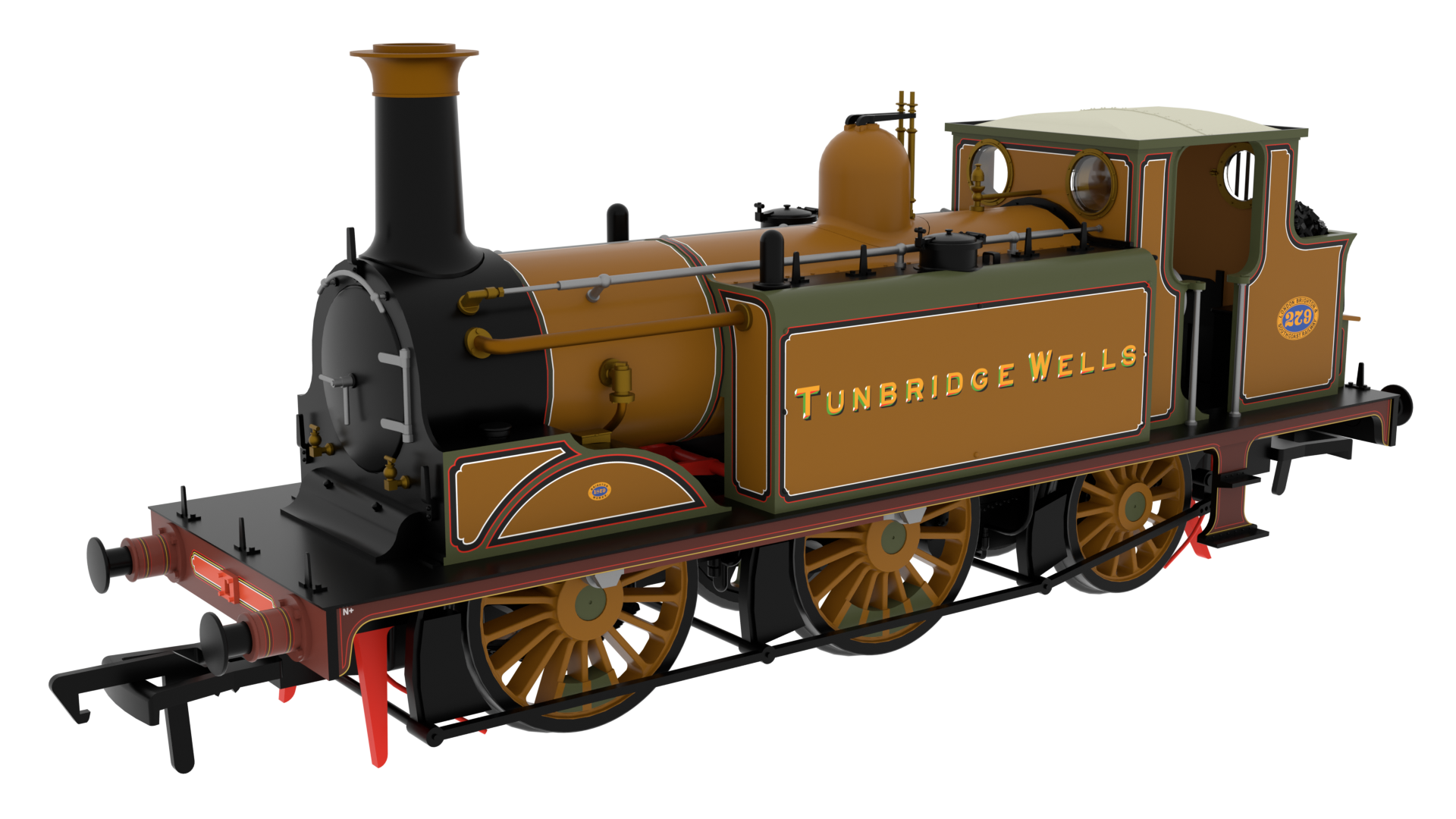
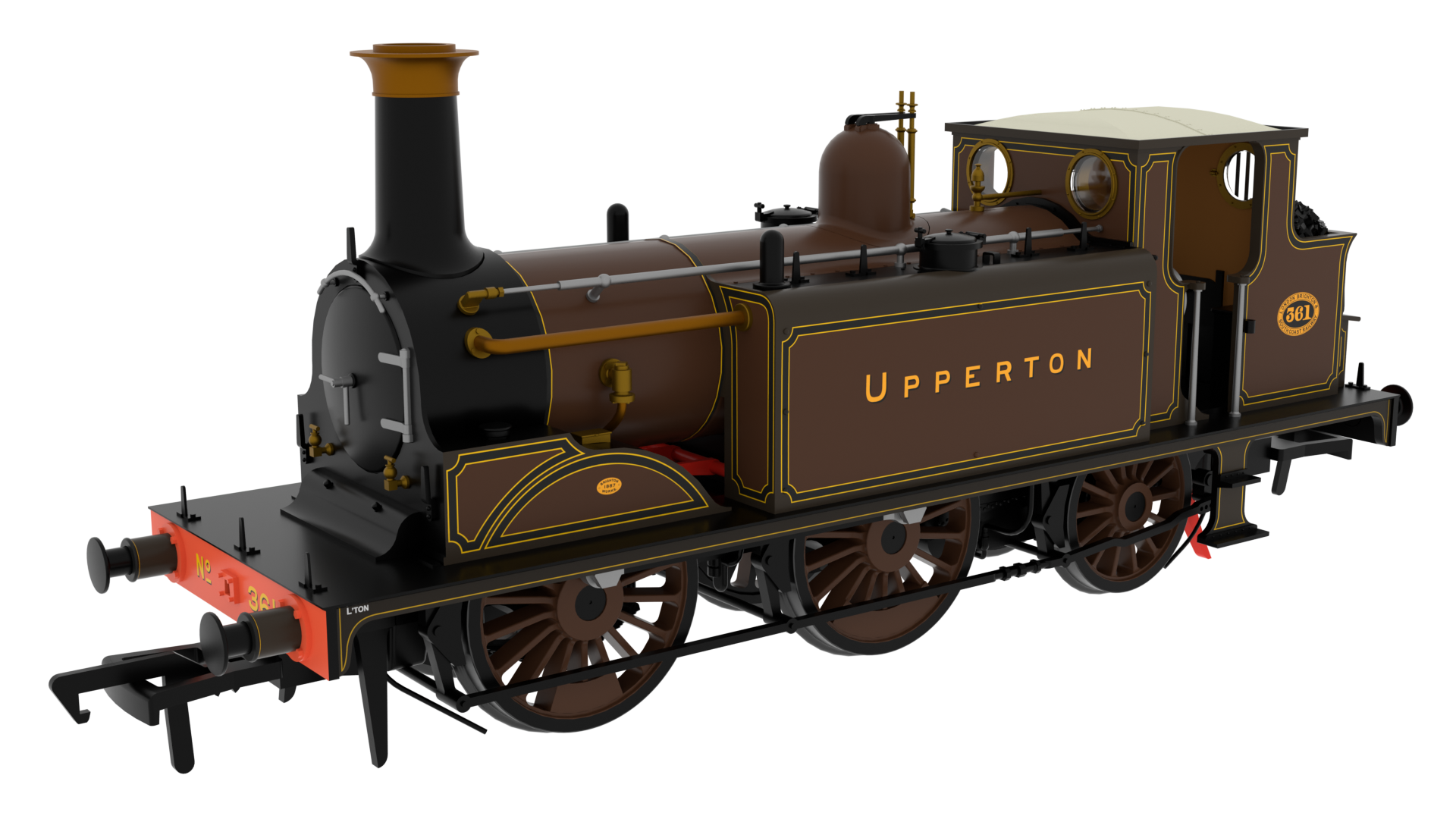
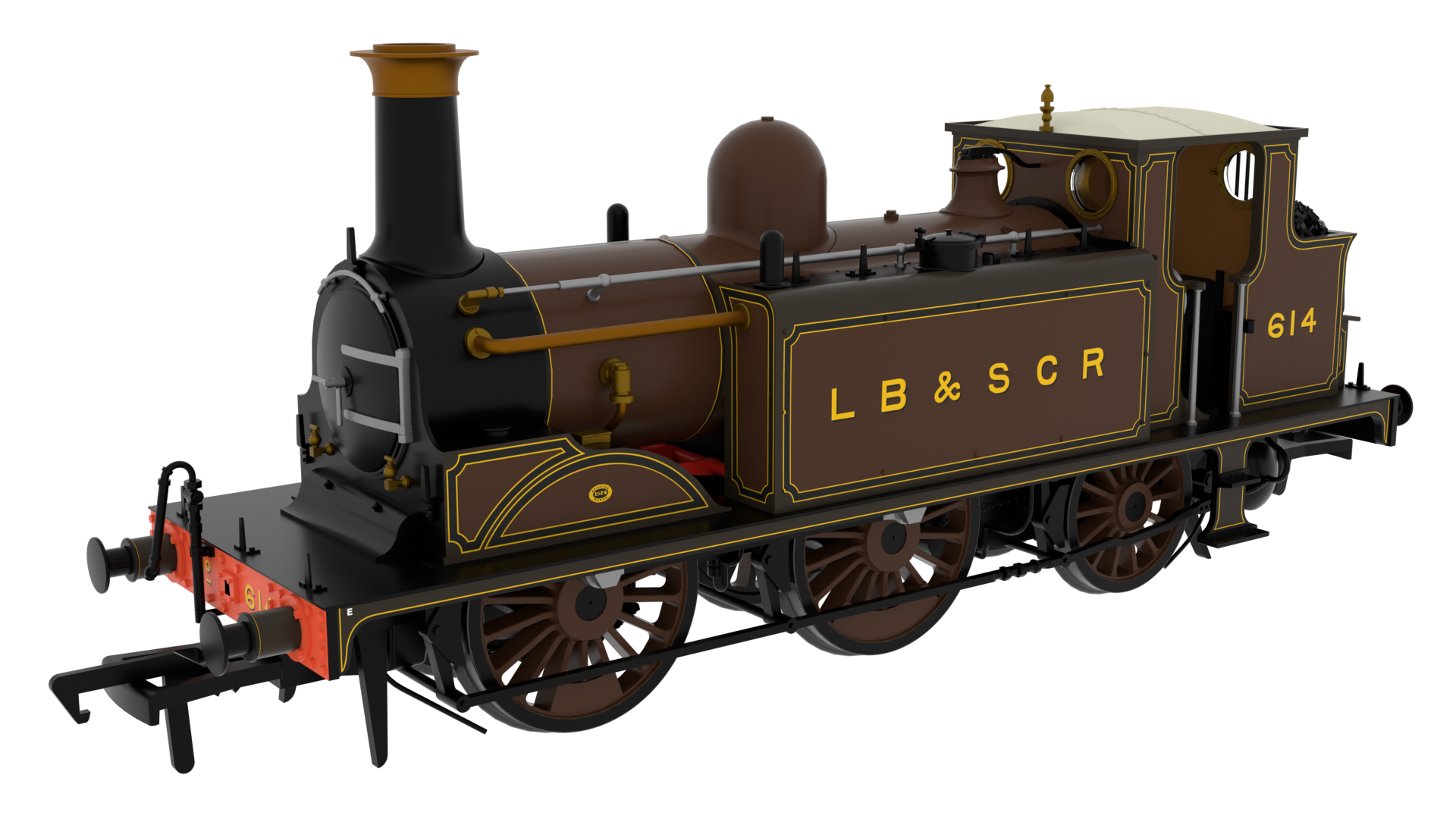
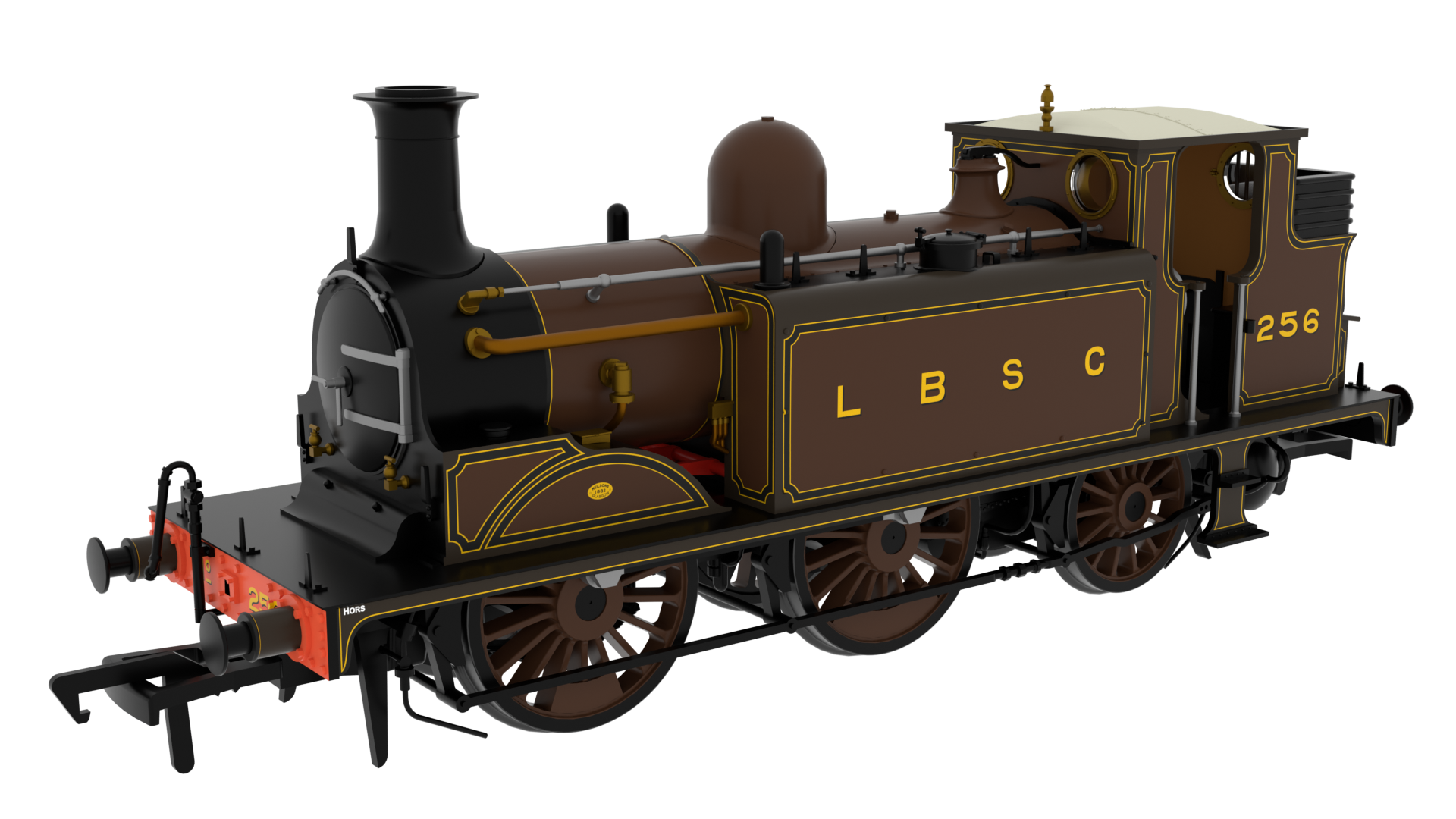
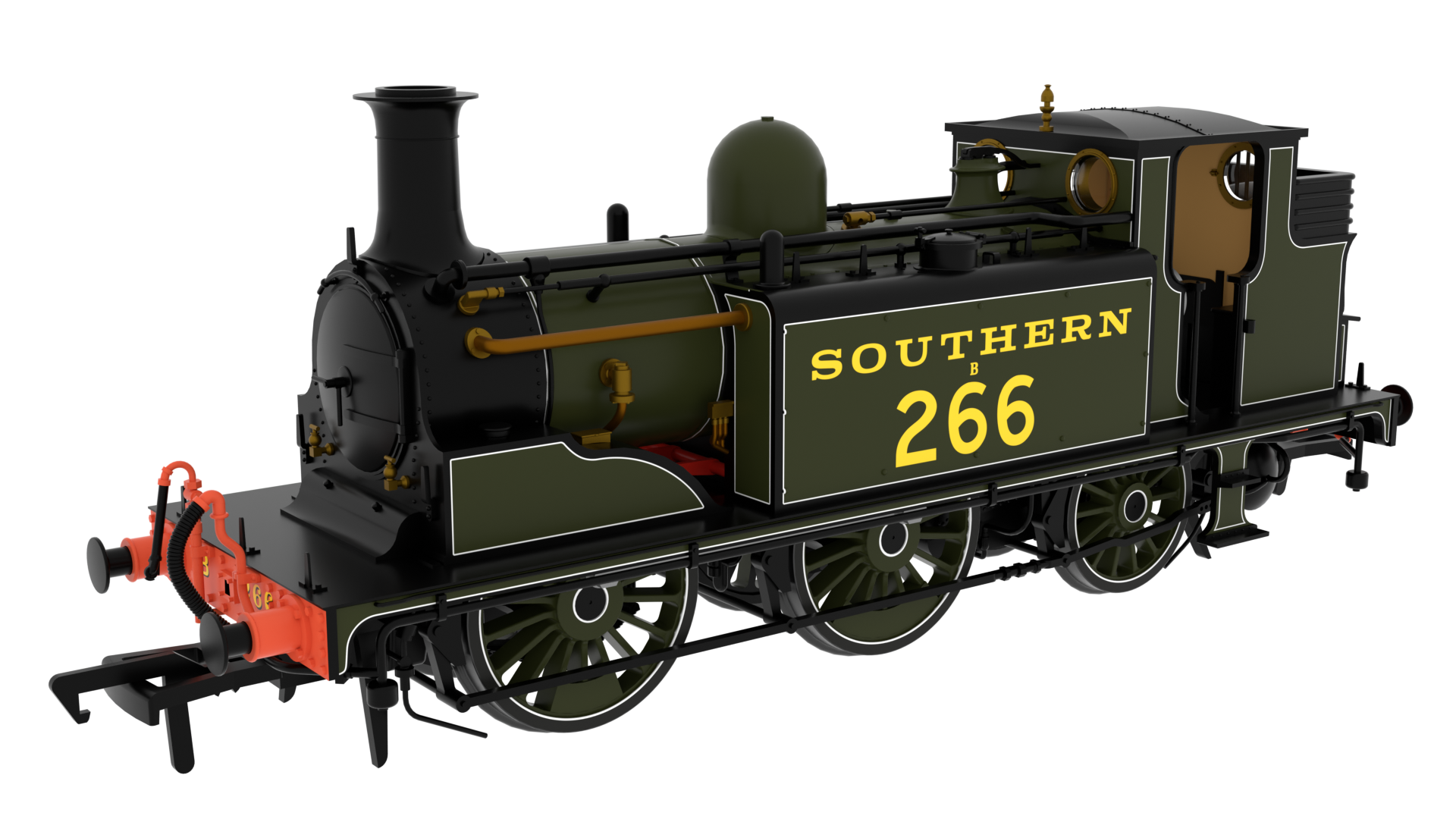
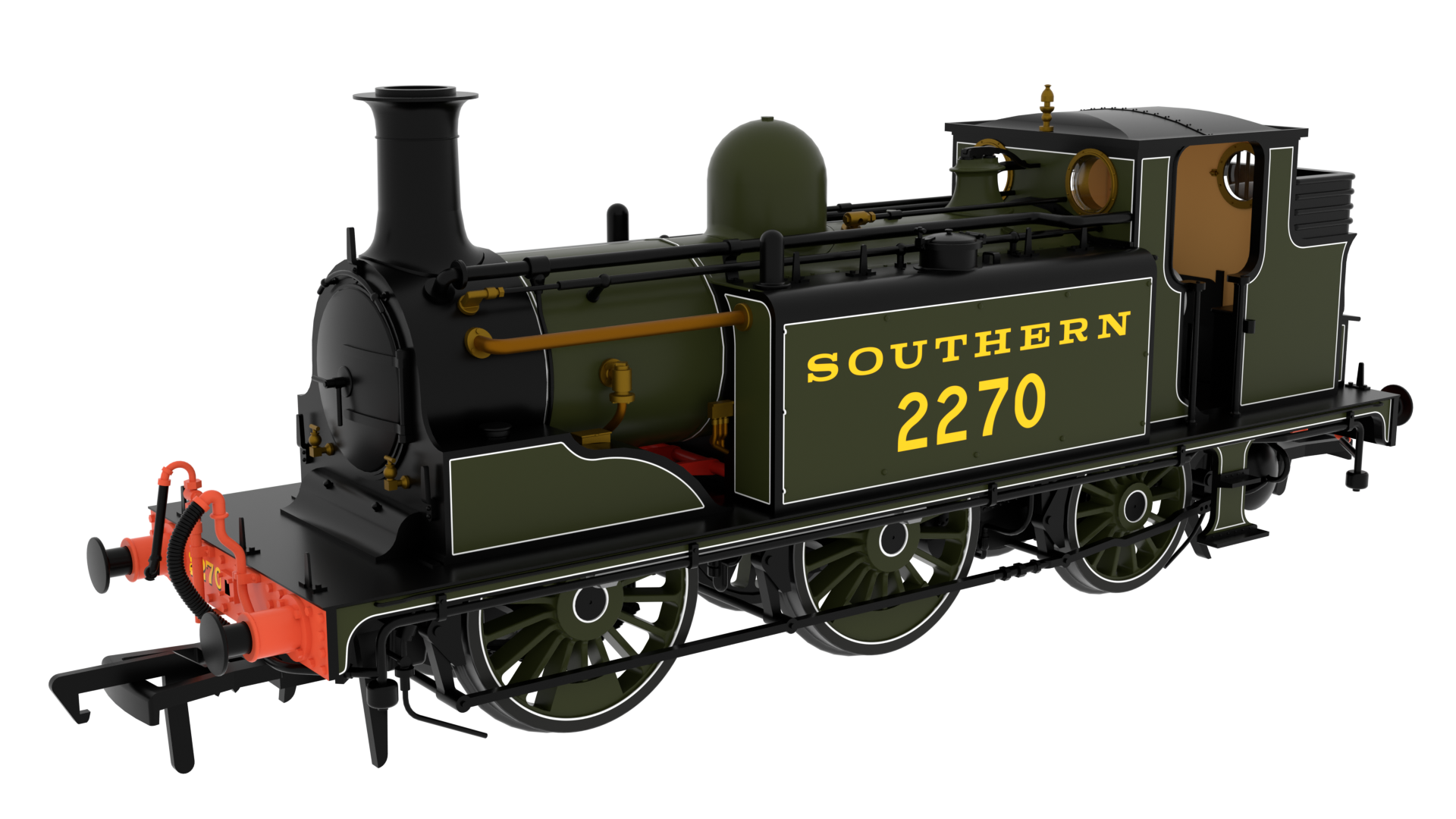
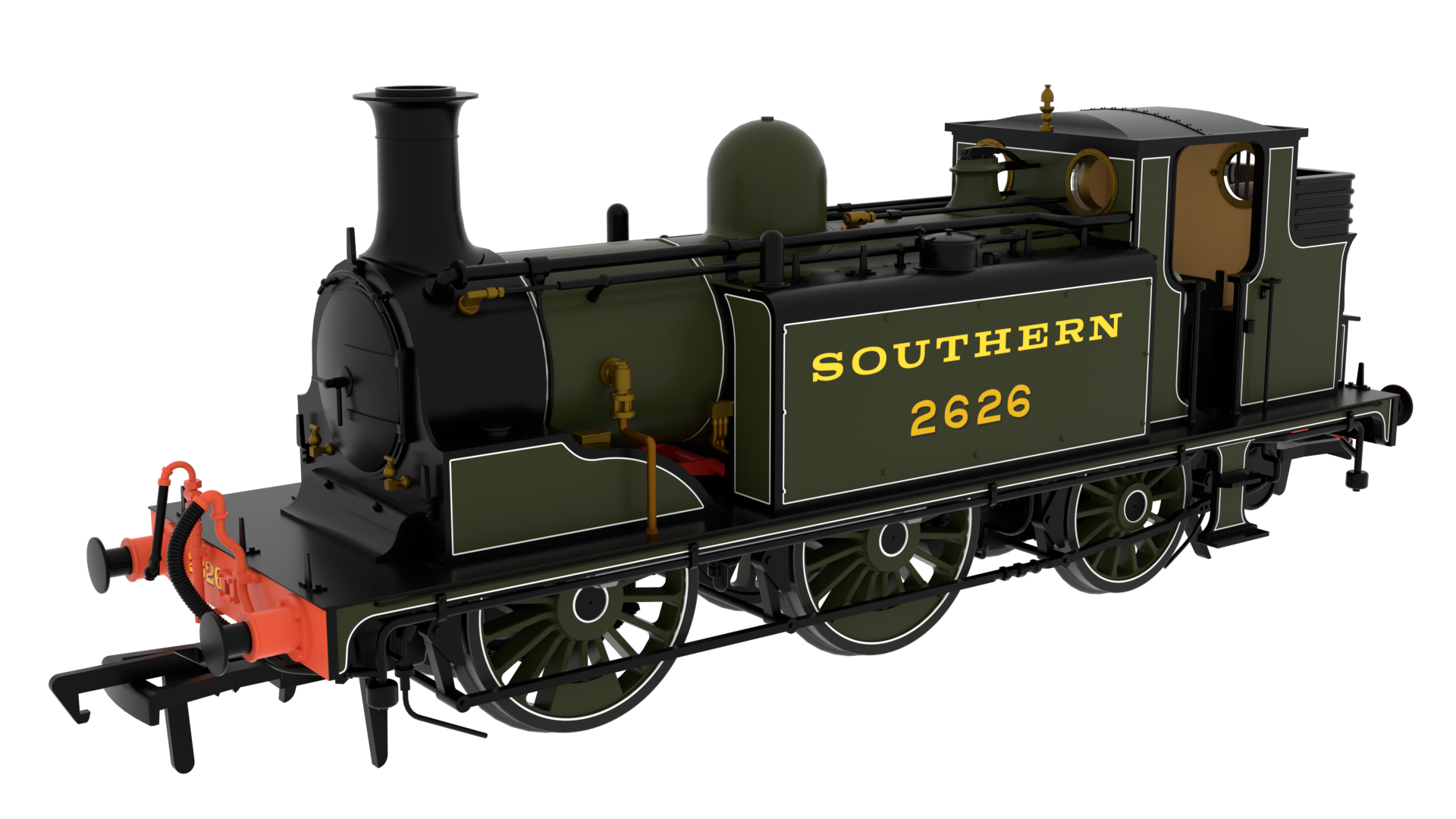
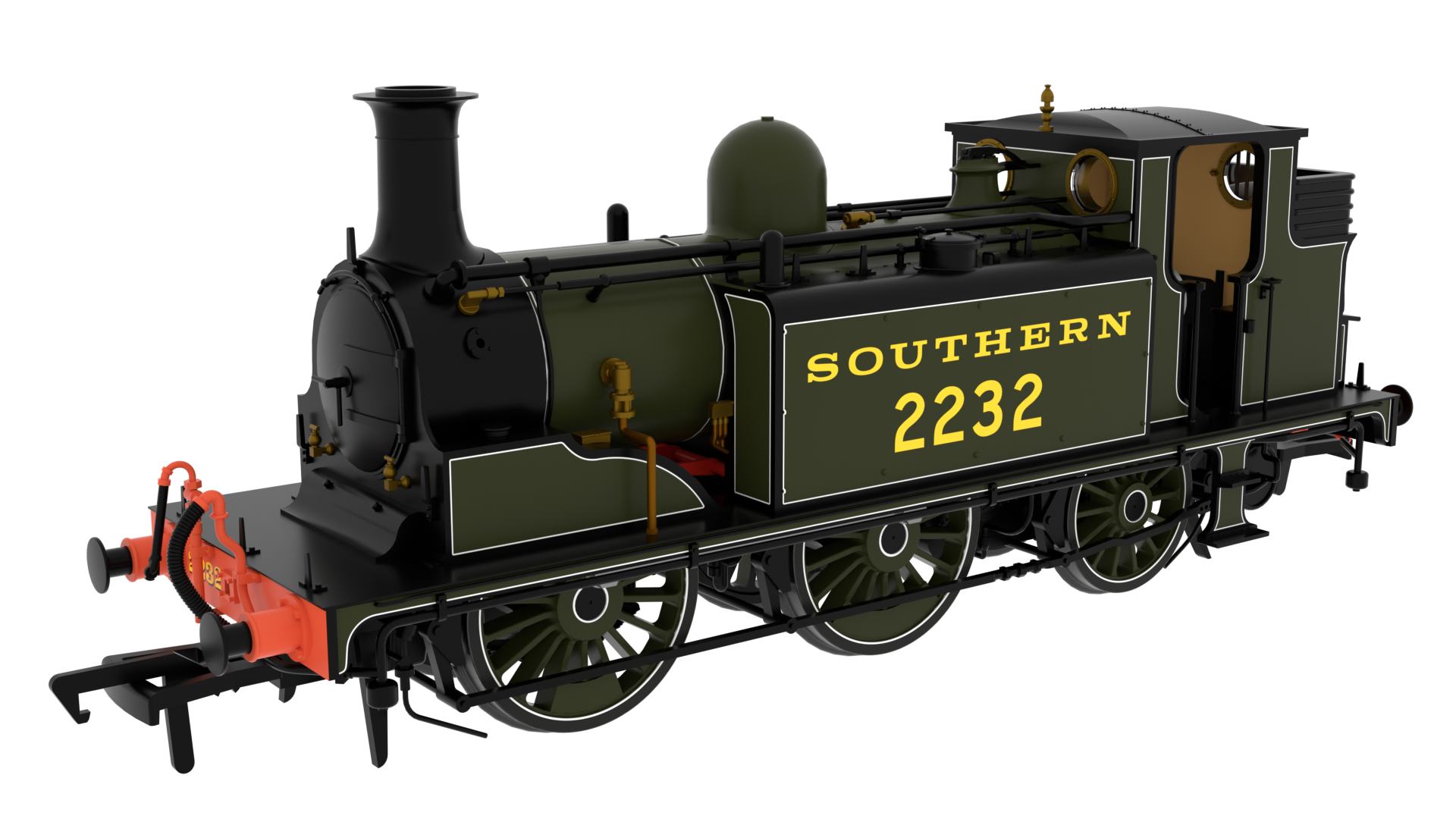
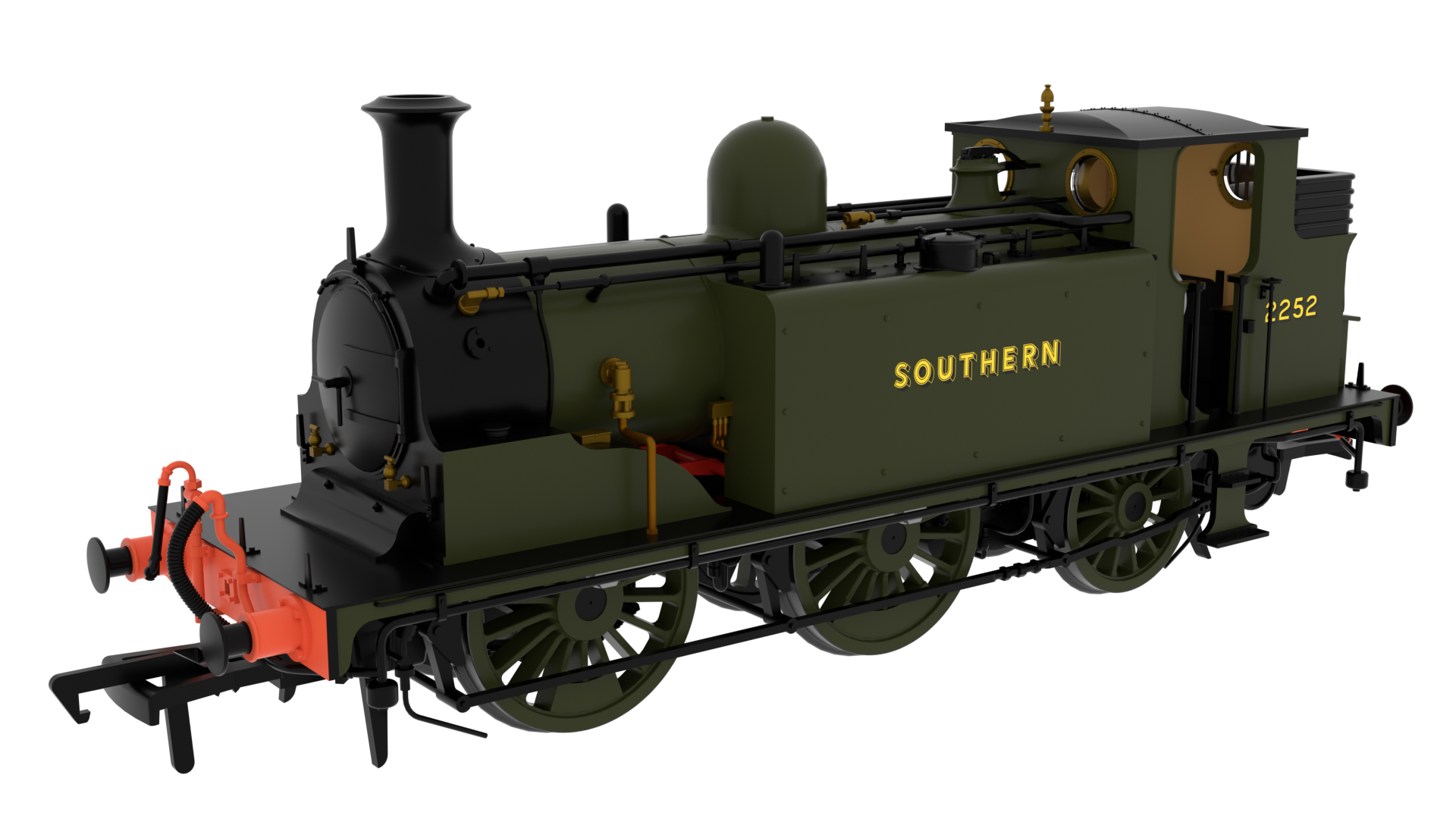
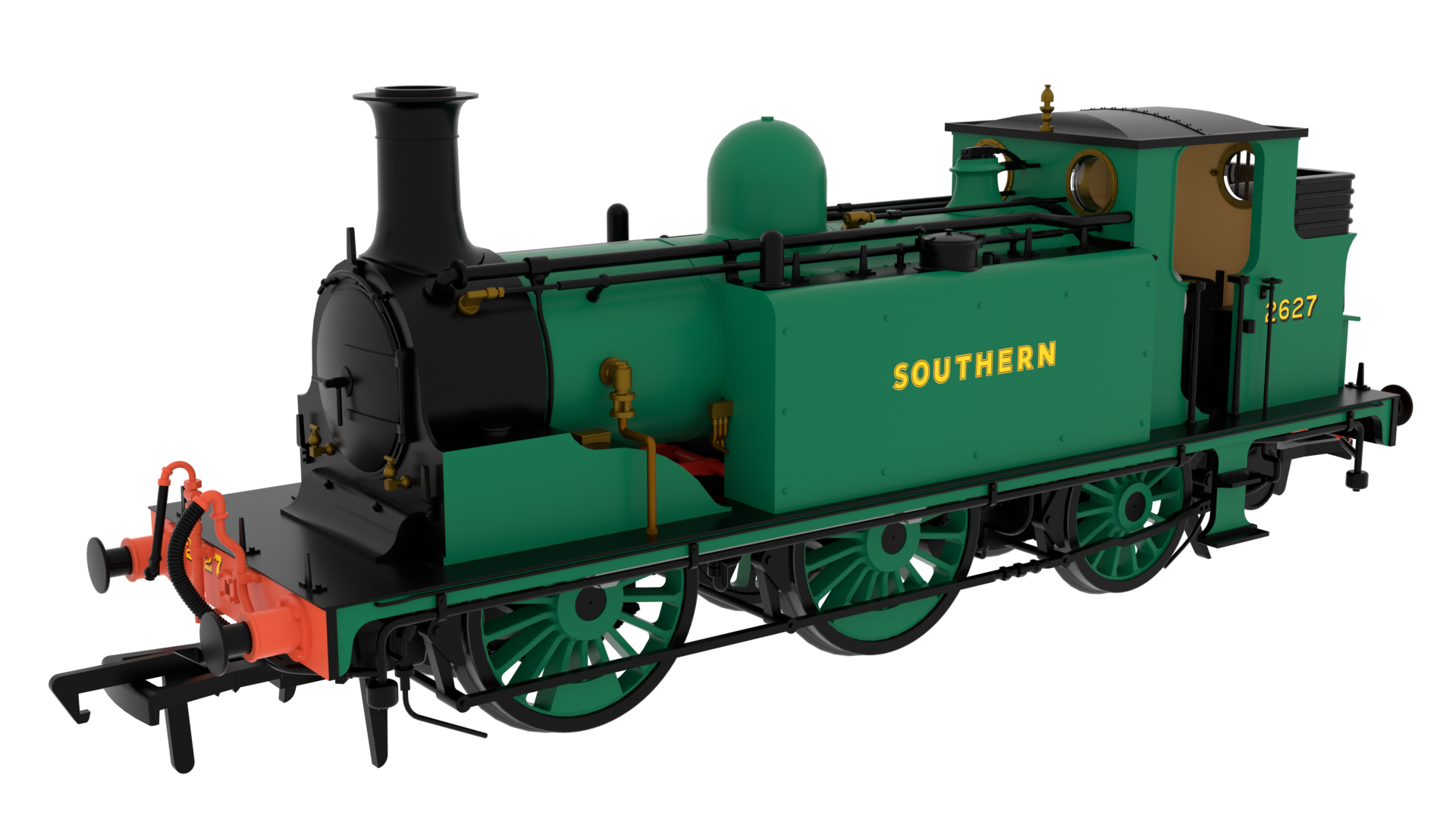
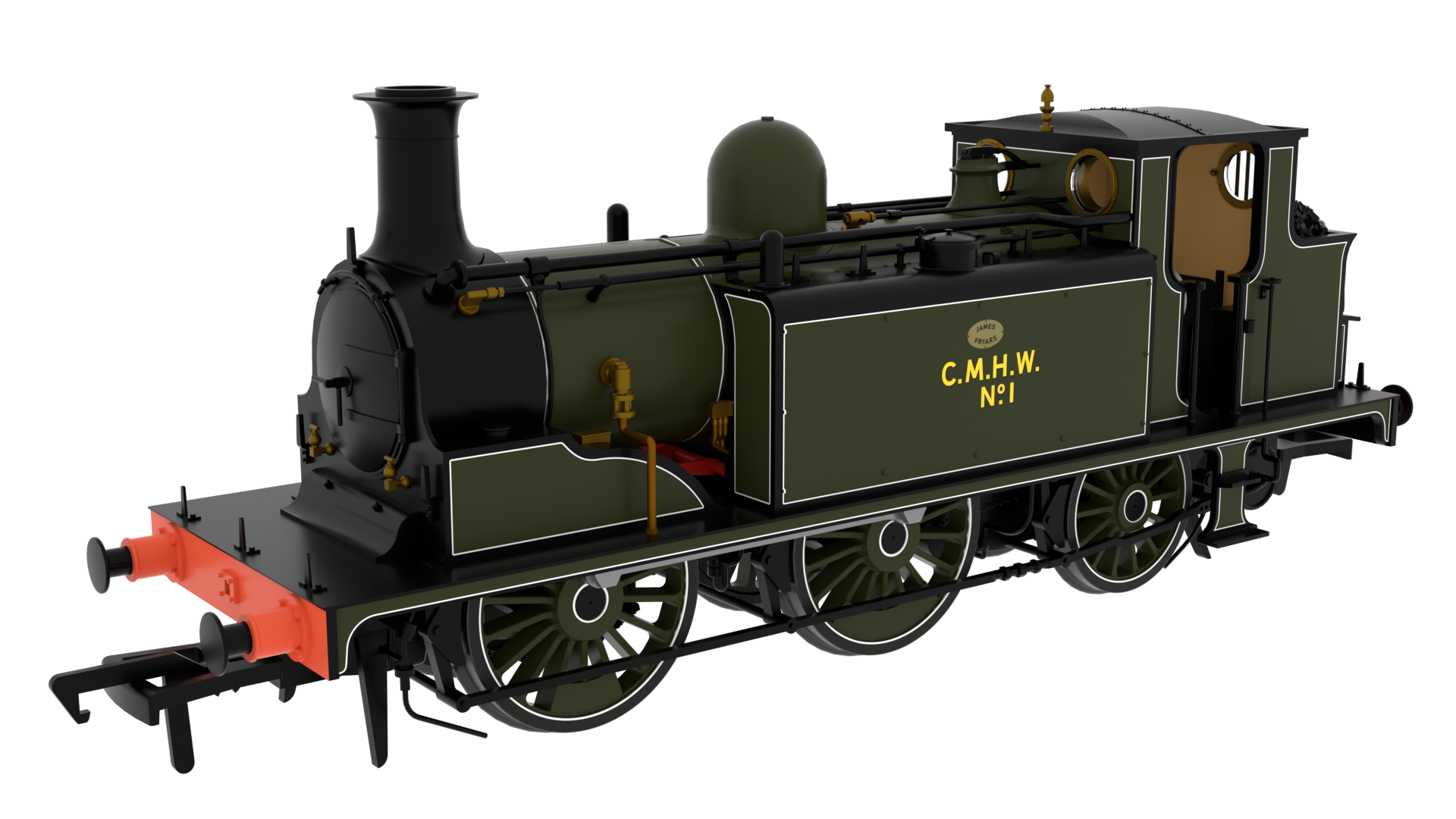
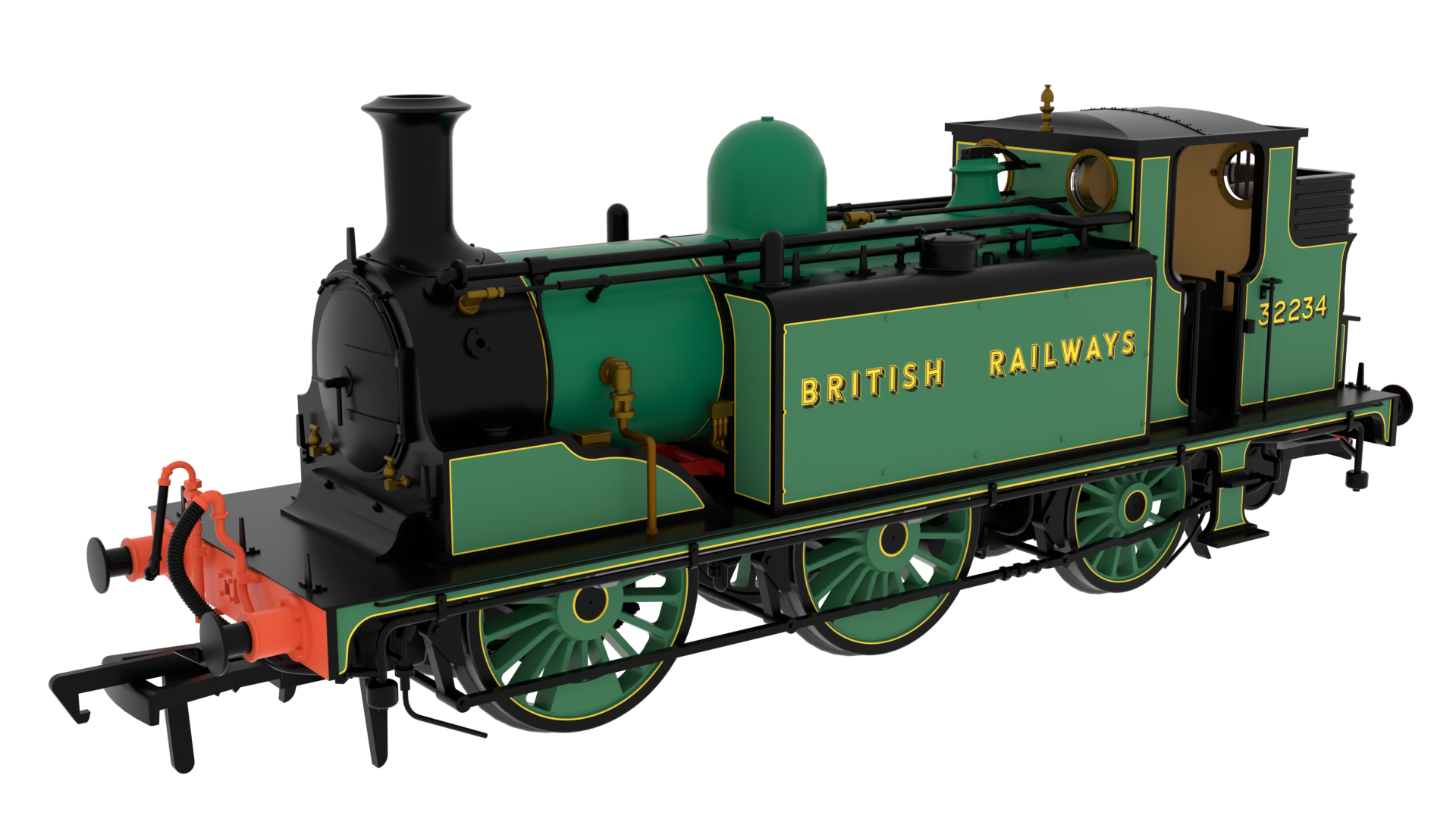
Following our incredibly popular LB&SCR E1, we are pleased to announce our second OO Gauge LB&SCR loco: the much-loved LB&SCR D1 0-4-2T. Where the E1 was designed to cover freight traffic across the Brighton lines, the D1 primarily fulfilled suburban passenger duties. Making them the perfect complement to their sister loco, and the ideal candidate to add to your Brighton or Southern collection.

At the start of the 1870’s there was a dramatic increase in passengers on the London, Brighton and South Coast Railway, particularly those commuting to and from London.
The now famous ‘Terriers’ had proved effective in many ways; however, they simply couldn’t cope with what was required. Struggling with the larger, heavier internal trains and were unable to effectively haul suburban services to the speeds and distances required. Although the LB&SCR had several larger classes of tender loco at their disposal, these caused havoc with the timetable on these shorter services as they took additional time to turn them at either end of their journey.
Up stepped William Stroudley, Locomotive Superintendent of the LB&SCR. He designed a new 0-4-2 tank engine, specifically outfitted to haul this type of train. The new loco would be designated as the D1, or more commonly the ‘D-Tank’ by crews and railway staff.
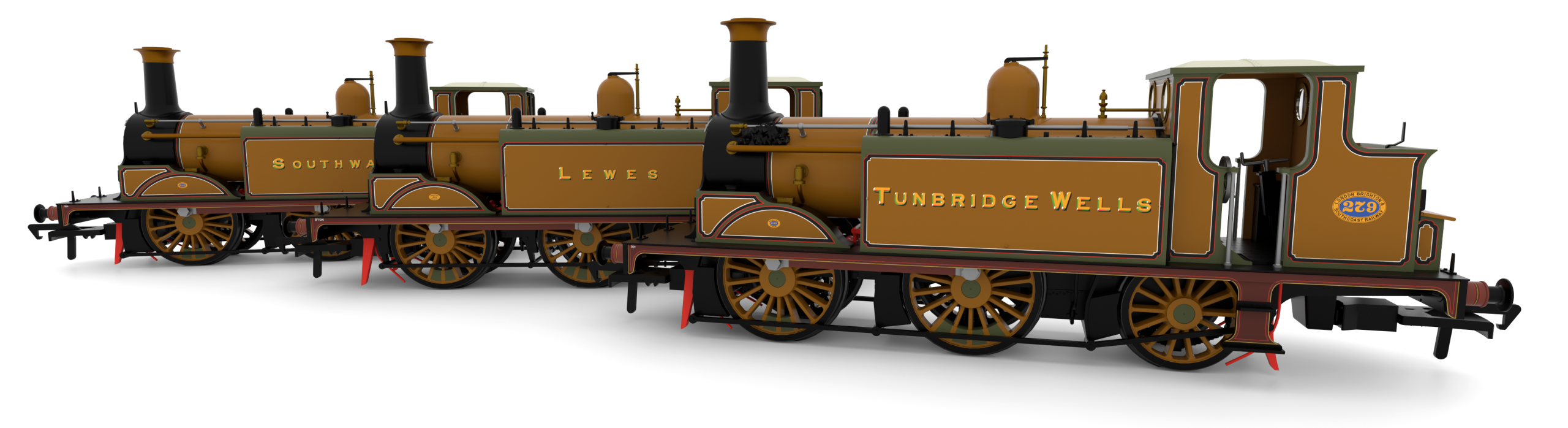
Between 1873 and 1887, one hundred and twenty-five examples of the class were built. The majority were built at the railway’s Brighton Works; however, thirty-five were outsourced to Neilson and Co. as the Works were already full of other loco classes being constructed at the time.
Despite their size, the D1 boasted an impressive power-to-weight ratio and fuel consumption. This, combined with their good acceleration, enabling them to keep to the timetable, and smooth running, made them very popular with crews. The Class’s ability to pull pretty much anything required also made them a favourite of Shed Foremen, as they could be used to supplement services as required.
In their earlier years, the class were primarily based at London engine sheds. As more of the class were constructed, they were disbursed further across the Brighton network.
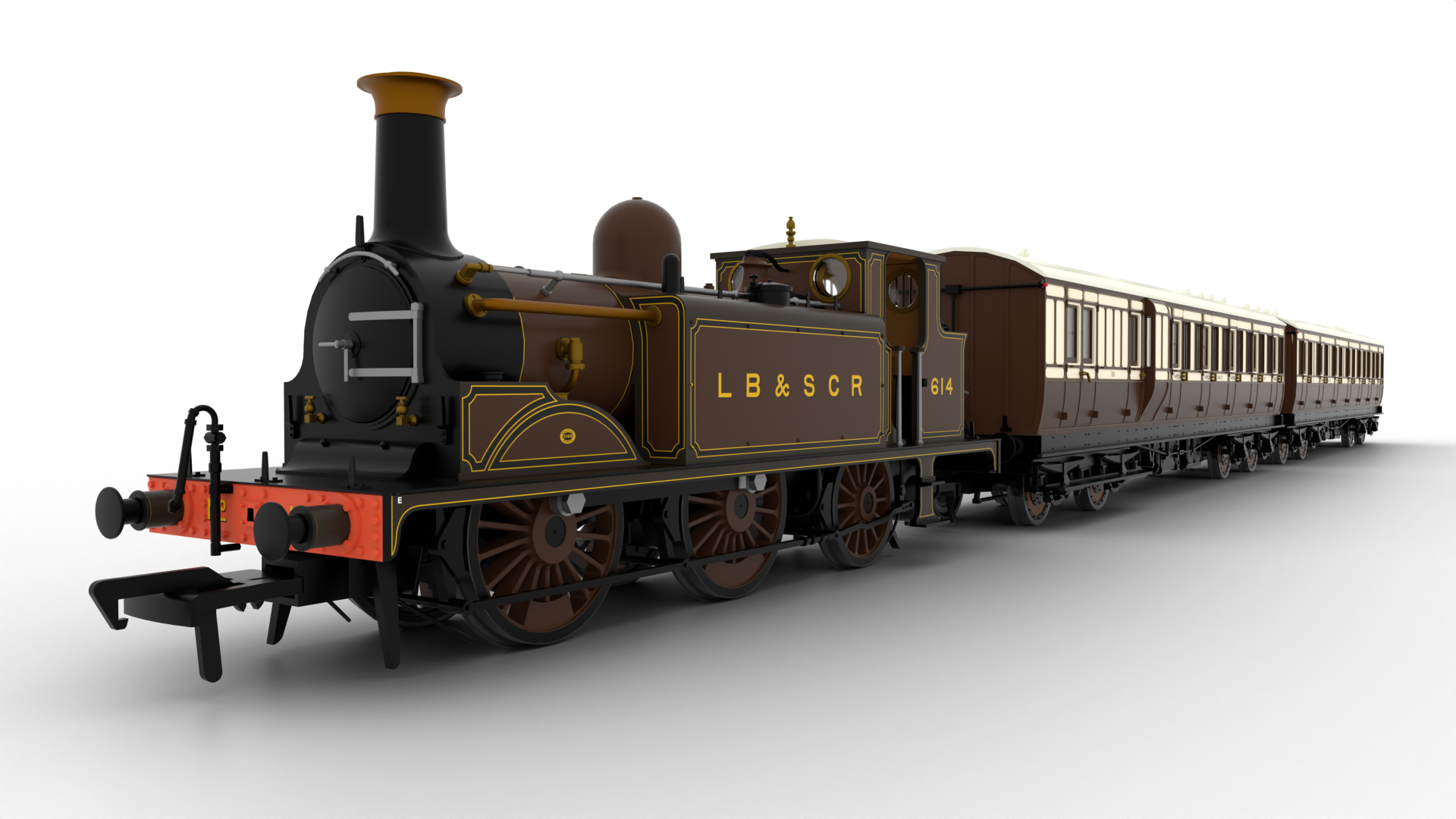
As newer and more powerful locos came into service, such as the E4, the D1’s were relied on less and less for regular heavier services. A handful underwent an upgrade and were classified as the D1X, though these weren’t a success.
The Southern Railway inherited one hundred and eleven D1’s and one D1X at the grouping in 1923. Although they underwent various modifications throughout their existence, the Southern refitted many of them once more; this time adding push-pull equipment.
This led to their redeployment across the entire Southern network: examples could be found at Ashford and Yeovil sheds, along with a variety of other locations where they could be used on branch line push-pull services, meaning they had found homes across all three of the Southern’s constituencies.
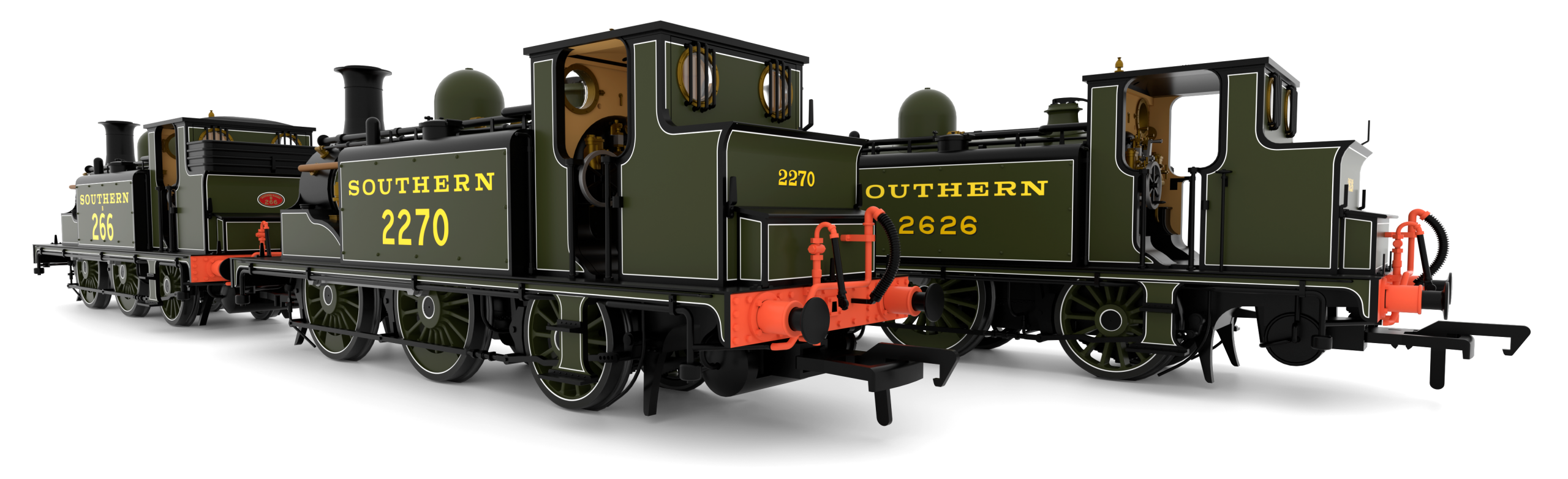
During the early stages of WW2, many had been placed into store in case of loco shortages. When the LMS requested seven locos suitable for light passenger duties, seven D1’s were sent. Subsequently finding a home in Scotland, where they worked until 1944. The class also played a vital role during the conflict, as nine were converted to have firefighting equipment; these were stationed at different sheds across the South to combat incendiary bombing.
In 1948, one D1 was purchased by Lancashire County Council for service on the Whittingham Light Railway; a unique railway that served the needs of the local psychiatric hospital.
Twenty examples of the D1 survived until BR ownership, but all had been condemned by the early 1950s. This left the WLR-owned loco as the sole survivor. Serious boiler defects meant this example was scrapped in 1956. Sadly, none were saved for preservation.
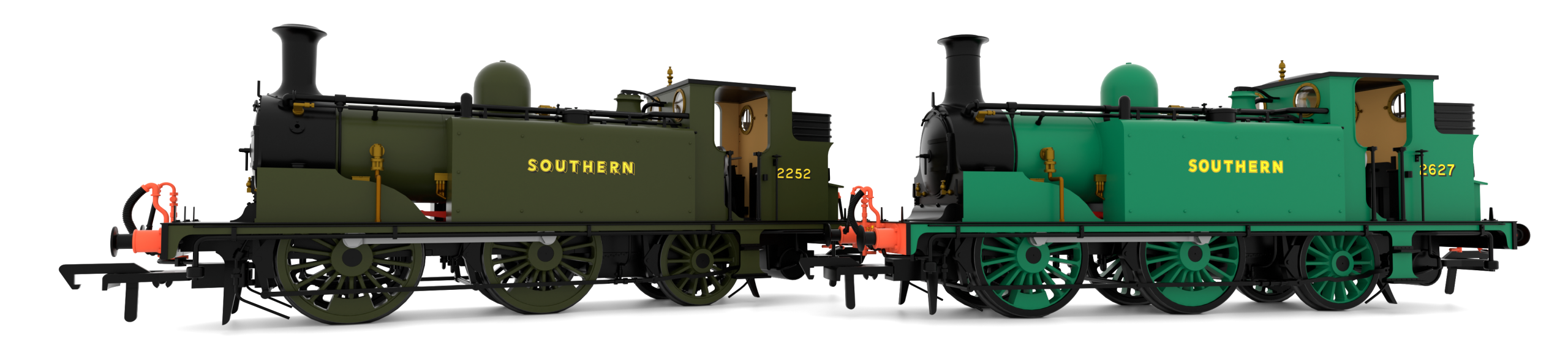
Our new OO Gauge rendition of the LB&SCR D1 0-4-2T will be available in a variety of liveries. These include various LB&SCR and SR versions. The range also includes Whittingham Light Railway and ‘What-if’ BR Malachite liveries.
You can look forward to a smooth-running mechanism, enhanced with a MoPower stay-alive capacitor, all-wheel pickups, and powered rear wheels.
Tooling differences throughout the range include different boilers, tanks, smokeboxes, chimneys, domes, safety valves, whistles, brake blocks, Westinghouse pumps, and many more. Certain versions are then equipped with push-pull equipment, condensing pipes, air reservoir tanks and more.
Other features include a factory-installed speaker, front and rear NEM 362 coupler pockets, sprung buffers, a Next 18 DCC decoder socket, and firebox flicker with a dynamic fire draw effect on DCC-fitted models.
We are pleased to say that the project is already at the tooling stage.
Order your model now by clicking on the item below: